This is default featured slide 1 title

Go to Blogger edit html and find these sentences.Now replace these sentences with your own descriptions.

This is default featured slide 2 title

Go to Blogger edit html and find these sentences.Now replace these sentences with your own descriptions.

This is default featured slide 3 title

Go to Blogger edit html and find these sentences.Now replace these sentences with your own descriptions.

This is default featured slide 4 title

Go to Blogger edit html and find these sentences.Now replace these sentences with your own descriptions.

This is default featured slide 5 title

Go to Blogger edit html and find these sentences.Now replace these sentences with your own descriptions.

Tampilkan postingan dengan label cadillac. Tampilkan semua postingan

Selasa, 30 November 2010

2010 LA Auto Show Wild Concept Cars at the


Optimism is back in style in the automotive world. The concept cars on display during the 2010 LA Auto Show prove that automakers are again willing to take risks and push boundaries. After a couple dismal years of sales due to a global recession, manufacturers are exhibiting a renewed sense of creativity.

Some of the concept cars seen in Los Angeles rely on heritage to spark a new ideas for the 21st century. The aggressive-looking Audi Quattro Concept is a modern interpretation of the German company's famous all-wheel-drive sport coupes from the 1980s.

Other automakers chose to break all the rules and display cars that look ready to take flight or travel through time. The Jaguar C-X75 and Mercedes-Benz Biome concepts are not only wildly futuristic, they're absolutely gorgeous, and a sign of even more good things to come.

This is the Mercedes-Benz you'll aspire to own in, say, 2310. The bright white concept looks like it belongs on the set of Star Trek. Yet the Biome was actually designed at the German company's design studio in Carlsbad, California. There's room for four-passengers inside, or so we're told, and the seating position is in a diamond format.

The best part is that Mercedes-Benz says the Biome can be grown from seeds, and not built in a traditional factory. It sounds crazy, but that's part of the fun with any dream car. Using genetically modified trees and powered by something called BioNectar4534, Mercedes-Benz says the Biome's bio-fiber cloth body would be grown organically, and on the road, the car would emit pure oxygen. The Biome reportedly would weigh only 875 lbs.

It will be several generations before anyone starts pondering the spec sheet for a genetically-built Mercedes like the Biome.

Jaguar C-X75 Concept


Following its impressive Paris debut, the Jaguar C-X75 turbine-electric hybrid supercar took center stage at the LA Auto Show. While very much a concept, the C-X75 represents Jaguar's new design face for upcoming models. That's excellent news, because this is one pretty kitty.

Even better is the fact that all this beauty is more than skin deep. At each wheel is an electric motor that weighs 100 pounds and provides 195 horsepower (145 kW) of power. Power for the electric motors comes from a 506-pound lithium-ion battery pack, which Jaguar claims takes a full charge in just 6 hours at 240 volts. Running only on electric power, the C-X75 will provide a driving range of 68 miles.

With the help of two micro gas turbines, the C-X75's range jumps to 560 miles. Jaguar claims the C-X75 can accelerate from zero to 62 mph in 3.4 seconds, while top speed is reportedly 205 mph. All that turbine-generated power creates a lot of heat, as evidenced by sign at the exhaust outlets with the warning: Beware of blast.

Audi Quattro Concept


The Audi Quattro Concept is another Paris Auto Show veteran, but that did little to dampen enthusiasm for this muscular show car. The inspiration for this sport coupe stretches back a few decades. The German automaker built the Quattro Concept to celebrate 30 years of its Quattro all-wheel drive system and the Quattro Sport that dominated rallying in the 1980s.

Finished in Col de Turini white paint, the Quattro Concept is powered by a compact turbocharged five-cylinder engine that puts out a whopping 408 hp and 354 ft-lbs of torque. The chassis beneath the car comes from an Audi RS 5, with its wheelbase shortened and roof lowered. To further trim weight, the two-passenger Quattro has an aluminum body and hood, plus hatch and bumpers made of carbon fiber. The car weighs just 2,866 lbs.

Based on the positive reactions to the Jaguar C-X75 in Paris and Los Angeles, we don't see how Audi could decide not to build the potent Quattro.

Nissan Ellure Concept
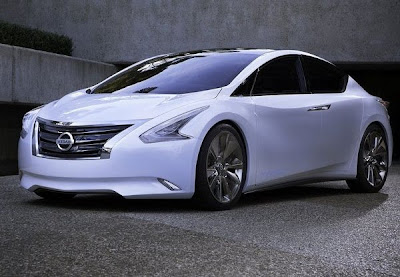

The Nissan Ellure Concept, a world debut at the LA Auto Show, is meant to bring excitement back to the sedan category while meeting consumer demands for environmentally friendly vehicles. Thankfully, the Ellure's elegant exterior and classy cabin help the car meet these high expectations. The design is expected to heavily influence the next Altima and Maxima sedan.

The Nissan Ellure has what the Japanese automaker refers to as "rhythmic" shapes around the body. The polished grille is aluminum and acrylic, its wing shape apparently inspired by "Kamishimo," the Samurai's formal outer coat. The headlights are LEDs, with a light ribbon adding depth to their appearance.

Inside, the front seats are covered with black recyclable suede fibers and feature slender acrylic seat backs. The front seat passenger can make use of an ottoman (no joke). Under the hood is Nissan's next-generation hybrid propulsion system: a supercharged 2.5-liter inline-four-cylinder engine mated to an electric motor with lithium-ion batteries.

Cadillac Urban Luxury Concept


Also seen for the first time in Los Angeles, Cadillac's Urban Luxury Concept addresses the move to smaller and more fuel-efficient city cars. The exterior shape of the Urban Luxury Concept carries Cadillac's strong and instantly recognizable sharp contours of its Art & Science design philosophy. The huge 19-inch wheels are pushed to the corners of the diminutive body to create a muscular stance and maximize interior volume.

A large windshield, overhead skylights and see-through A-pillars aid visibility while adding a spacious feel of the interior. The Cadillac Concept accommodates four passengers, with access to the cabin handled by huge chiseled door slabs that open scissor-style.

The Urban Luxury Concept's powertrain is a hybrid, featuring an electrically assisted turbocharged 1-liter inline-three-cylinder paired to a dual-clutch transmission. An engine start-stop function and regenerative braking help nudge the fuel economy to a claimed 56 mpg city and 65 mpg on the highway.

It remains to be seen whether the Cadillac family tree has room for a vehicle like the ULC. Yet itís exciting to see the American brand combine traditional luxury with the push towards greater fuel-efficiency.

Mazda Shinari Concept


The LA Auto Show was the first opportunity for the public to see the handsome Mazda Shinari concept. Pictures of the car have circulated online, yet this was the fist auto show appearance for the sedan that represents the brand's new design language.

Traditional Mazda design elements will be retained, such as the five-point grille and the prominent front fender shape, but the four-door Shinari embodies a new dynamic that blends sharp character lines with sculpted body shapes to convey a sense of power and elegance.

Crisp character lines, sculpted body panels, and a pronounced cab rearward proportion give the Shinari a powerful appearance. The attention to detail is remarkable for a show car. The satin-finish metal trim that frames the bottom of the grille splays out through the headlamp openings. This strip seems to travel through the wheel arch and re-emerges as a side vent accent.

Elements of this new design might soon appear on passenger sedans like the Mazda6, as well as replacements for sporty models like the MX-5 Miata and RX-8.

Subaru Impreza Design Concept


The Subaru Impreza Design Concept is an aggressive, but familiar, outlook for the all-wheel-drive-all-the-time company. Gone are the days of the three-box Subaru, as the overall line from the front of the car, through the bottom of the A-pillar, the roof, through the C-pillar and ultimately the trunk, is smooth and continuous. The front end -- with all the character lines, headlights, fog lights and air openings -- is much sharper and more pronounced than before.

For a company that has sometimes struggled to find its own look, the Impreza Design Concept is a safe step towards a more lasting long-term impression. The engine is a 2-liter version of Subaru's trademark Boxer configuration flat-four motor. It's mated to a continuously variable transmission that Subaru calls Lineartronic.

The EyeSight system is a clever tech touch, comprised of a series of cameras located at the front of the roof. EyeSight provides for collision mitigation, and can display the feed that it sees through the in-dash video system. The cabin is filled with video panels, including one located on the lower spoke of the steering wheel.

Kamis, 16 September 2010

2010 CTS wagon Reviewing

Reviewing the 2010 CTS wagon, The fact that you can now buy a Cadillac sportwagon gives you an idea how much has changed at Cadillac. Pop-off wire wheels and vinyl roofs are no longer on the options list. Beating BMW and Audi is.


WHAT'S NEW FOR 2010


The CTS sportwagon is Cadillac's newest model and the first-ever Cadillac sportwagon.

WHAT'S GOOD
Preying Mantis malevolent good looks. Knife-edged handling. Outstanding performance from optional direct-injected 3.6 liter V-6. Huge cargo area. Sharply crafted interior. More powerful - and quicker - than a BMW 3-Series wagon. Much more powerful than an Audi A4 Avant. Vastly less expensive than a BMW 5-Series wagon ($55,800 to start) or Audi A6 Avant ($53,310 to start).

WHAT'S NOT SO GOOD
Preying Mantis malevolent good looks may be too edgy for some buyers. No manual transmission option (even though one is available in the virtually identical CTS sedan). More expensive than a BMW 3-Series wagon (starting price $35,400 for rear-drive, $37,400 for xDrive all-wheel-drive) or Audi A4 Avant Quattro ($35,350).


ENGINES & PERFORMANCE


The CTS wagon offers the same two engine choices as the CTS sedan - a standard 3 liter V-6 that produces 270 hp and (optionally) a 3.6 liter V-6 that produces 304 hp. Right off the bat, this gives the aggressive Caddy an advantage over the BMW 3-Series wagon - which is not available with the 3-Series sedan's optionally available twin-turbo 3-liter six (300 hp). The most you can get in the BMW 3-Series wagon is the not-turbocharged and much less powerful 230 hp version of the 3 liter six - which is 40 hp less potent than the Caddy's standard engine and 74 hp down from the Caddy's optionally available engine.

The four-cylinder-only Audi A4 Avant, meanwhile, is totally outclassed.

The fact that the CTS wagon is also a larger car than either the 328i or the A4 Avant makes matters even bleaker (for BMW and Audi). Their size (and power) equivalent models - the 535i wagon and A6 Avant - are as much as $10,000-$15,000 higher-priced to start than the CTS wagon. Advantage, Cadillac. Both CTS engines feature variable valve timing technology and direct fuel injection, a more efficient way of getting fuel into the engine's cylinders without sacrificing power.

Both engines are also high-compression (11.7:1 for the 3 liter engine; 11.3:1 for the 3.6 liter engine) yet operate on regular unleaded fuel. Many high-powered (and high compression) engines in this segment either recommend premium for best performance and economy - or require it. The Caddy's 18 city/27 highway EPA fuel efficiency rating (3 liter engine w/RWD) is also slightly better than the much less powerful BMW 328i wagon (17 city/27 highway) and even more impressively, matches the four-cylinder A4 Avant's highway number (27 mpg) while only giving up 3 miles per gallon to it on city mileage (21 for the four-cylinder Audi, 18 for the V-6 Cadillac).

The BMW 5 wagon (with 300 hp engine) slurps it down at the rate of 16 city, 23 highway. The also-300 hp A6 Avant does better: 18 city, 26 highway. But neither beat the CTS. A six-speed automatic transmission is standard with either CTS engine; no manual transmission is available. All-wheel-drive is optional with either engine - a nice touch when you look around and notice that with many AWD-available luxury cars (sedans and wagons) you have to buy the optional engine to get the AWD. That's not the result of greed; it's necessary because the standard engine lacks enough power to deal with the added weight/loading of the AWD without noticeably hurting acceleration.

The CTS has no such problems. Both 3 liter and 3.6 liter versions are quick cars (0-60 in about 6.8 seconds for rear-drive versions with the 3.6 liter engine and just over 7 seconds for rear-drive models equipped with the 3 liter engine).

DRIVING IMPRESSIONS


BMW has for years been the standard for "driver's car" - the high water mark of perfectly synched steering, athletic balance and overall eagerness to be driven hard - yet also absolutely civilized when not being driven hard. The CTS sedan is certainly the BMW 3-Series sedan's equal. And the CTS wagon is better than the 3-Series wagon.

It's stronger and quicker, first of all - at least when equipped with the 3.6 liter engine. As noted earlier, BMW withholds the 3-Series sedan's optional twin-turbo six from the 3-Series wagon - allowing a gap of 74 horsepower between it and the CTS sedan. And it's not just raw power, either. The Caddy's engine is an engineering tour-de-force, upping the ante with both variable valve timing and direct injection - which gives it more power with better gas mileage than the BMW six. The Caddy's engine is also a high-revving engine, like the BMW's. Floor it (even in Drive) and the tachometer will swing close to 7,000 RPM and feel (and sound) good doing it, too.

It's just a shame that Cadillac decided not to offer the same six-speed manual transmission that's available in the CTS sedan in the CTS wagon given the aggressive/performance theme of the CTS. This is the one area where the BMW wagon has an edge over the Caddy as a sportwagon.

The car's handling/grip/ride, however, cannot be faulted. It will corner without squeal or lean or feeling unwell at very high speeds. My local "test track" is Bent Mountain road, a series of hairpins and sweepers that runs up about 1,000 feet in elevation from the valley to the top in about two miles of serious fun - in the right car. The CTS wagon is such a car.

These curves, posted at 35 mph, can be taken at 60 with no real worries other than the possibility of a cop coming down the mountain the other way. My test car had the optional FE3 performance suspension, which includes limited slip axle, 19-inch rims and 45-series ZR-rated summer tires. The FE3 package also includes sharper suspension settings and larger four-wheel-disc brakes. Along with the 304 hp engine, smartly shifting six-speed automatic and 3.42 rear axle ratio, it is a formidable machine.

STYLING & UTILITY

The funny things is, BMWs used to have the crisp styling - and now they're kind of blobby looking, with cottage cheesy rear ends and awkward styling elements - while Cadillac has emerged as the brand defined by its sharp lines and well-packaged, coherent styling.

The CTS wagon has the same basic nose and front end as the sedan but is defined by its dramatically styled aft section, especially the unusually shaped rear side glass, "dummy" C pillar and fixed mini-sized quarter-window. Take a look at the complex shapes and lines; individually, they seem unrelated but when you step back and view it as a whole, it all comes together, giving the CTS a car-show/concept look that is really wild. Ditto the rear section and liftgate, with its relatively small glass section flanked on either side by two huge LED brake/tail-lights that taper upward all the way to the roofline and which are shaped to echo the proud fins on classic '50s and '60s-era Caddys.

The cabin is likewise uber-modern and beautifully finished, with satin-nickle trim plates and high-quality Sapele Pommele wood inserts. It's a neat-looking and inviting space, contemporary but not austere. The only downside is the CTS gives up some passenger (and cargo) room for the sake of its avante-garde good looks. The stodgier BMW 3-Series wagon, for example, has a bit more total cargo capacity (61 cubic feet vs. 58 for the Caddy). But the upside is the Caddy's got a bit more rear seat head and legroom - about half to three quarters of an inch in each category. That may not sound like much, but if it means the difference between having some air between your head and the car's ceiling, it's the difference between usable back seats and not usable back seats.

The CTS wagon easily beats the A4 on cargo capacity (51 cubic feet) though (surprisingly) the physically smaller (outside) Audi is roomier for passengers inside than either the CTS wagon or the BMW 328i. It has 40.4 inches of front seat headroom and 38.2 inches of rear seat headroom.

The BMW 5-Series wagon and A6 Avant have roughly the same front and back seat head/legroom - and almost exactly the same total cargo capacity (58 cubic feet for the BMW, 59 cubic feet for the Audi). But as with the power/performance issue, to get "par" in these brands, you have to pay through the nose. The CTS is priced much closer to the the 3-Series and A4 Avant than it is to the 535i and A6 Avant - both of which start within striking distance of $60,000 vs. under $40k for the Cadillac. You are literally getting more for your money with the CTS.

QUALITY & SAFETY

Cadillac has come back - and pulled dead even with the best that Europe and Japan have to offer. There may be reasons not to buy a new CTS (wagon or sedan) but they have nothing to do with issues of build quality, fit and finish or materials and workmanship. This is a magnificently put-together car.

Cadillac's confidence in its renewed excellence shows through in the CTS wagon's standard four year/50,000 mile comprehensive and five year/100,000 mile warranty coverage - which is stronger than BMW and Audi offer (four years/50,000 mile basic and four years/50,000 miles on the powertrain).

Lexus doesn't sell a sportwagon, but for perspective, the drivetrain warranty on the much-vaunted ES350 is six years/70,000 miles. Mercedes-Benz is apparently even less confident in the long-term durability of its products. The E-Class wagon (which is larger than the CTS wagon, not really a sportwagon and also priced at $57k to start, so there's no direct comparison, vehicle to vehicle) comes with a rather skimpy four-year/50,000 mile drivetrain warranty.

As far as safety equipment, the CTS wagon comes with all the gear (ABS, side-impact and curtain air bags, traction and stability control) that has become as much a given in a luxury car as air conditioning is in family cars - plus GM's OnStar system, with one year's subscription included. OnStar can summon police and EMS to a crash scene automatically, even if you are not conscious. A transponder in the vehicle lets the OnStar network locate the car wherever it is. Some may not like the Big Brother-ish aspects of OnStar but there's no denying the help it can provide in an emergency.

THE BOTTOM LINE

There are only a few luxury wagons on the market - even fewer real-deal sportwagons that are as fun to drive as they are useful. The CTS wagon is easily the standout among them, if you want style and driving excitement along with room for a couple of labrador retrievers in the back - for potentially a lot less money than BMW or Audi are demanding for a similar powerful/similarly sizable machine.